Summer Annual Grasses
You can plant summer annuals when the soil temperatures reach 60 degrees. They respond well to nitrogen and will produce a lot of feed during the summer months. Here is a great article on sorghum sudangrass management. Also be sure to check out our new Summer Annual Guide.
Summer Annual Forage Information
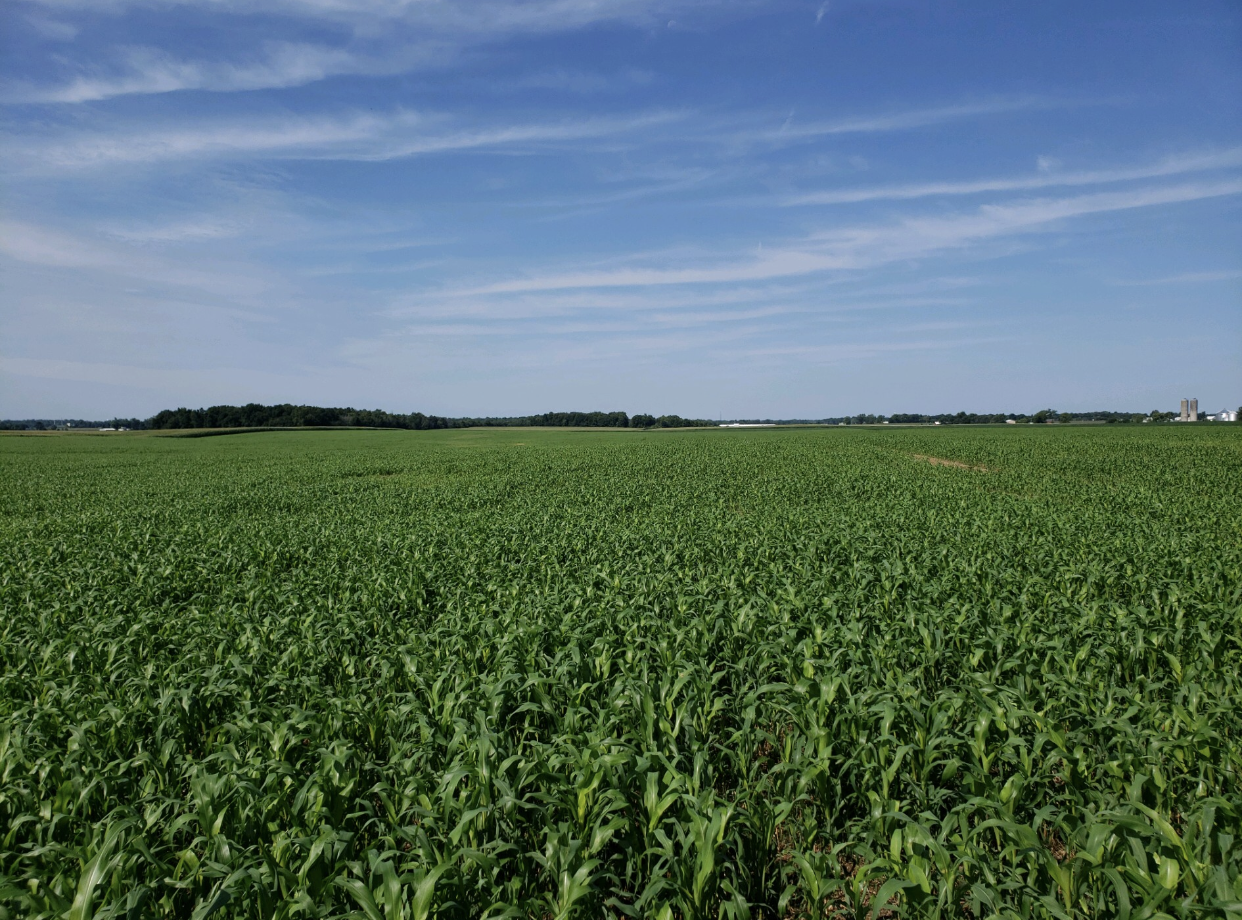
Male-Sterile Sorghum
Male-sterile sorghum does not produce pollen and therefore does not form grain, so nutrients are not directed into a starch-rich kernel. Instead, energy remains distributed throughout the plant as sugars and digestible fiber, creating a more uniform forage. This provides an alternative to corn silage—offering competitive feed value with typically lower input costs and greater drought resilience.
Corn’s energy comes largely from the kernel, which is high in starch (≈25–35% DM), whereas male-sterile sorghum has little to no starch, relying instead on sugars and digestible fiber.
GW 400 BMR is a male-sterile sorghum
Dry Stalk Sorghum Sudangrass
Dry stalk hybrids have reduced stem moisture and improved drydown characteristics, not inherently “dry” forage. At comparable maturity, they are often 8–10% lower moisture, allowing faster wilting and more consistent harvest timing. This trait is beneficial for silage and can aid hay production, but successful dry hay still depends on environmental conditions and proper conditioning.

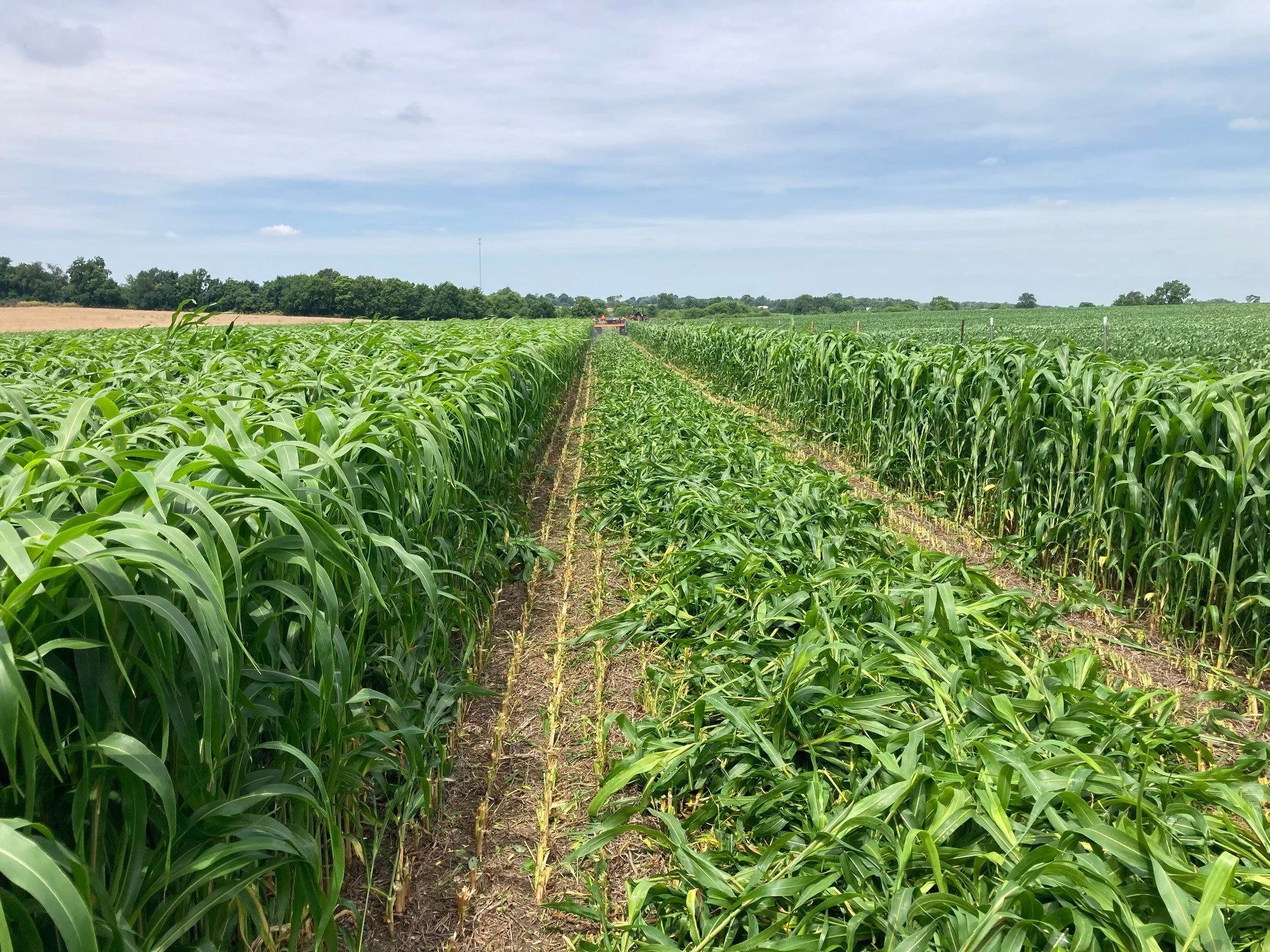
Brachytic Dwarf Sorghum sudangrass
Brachytic Dwarf hybrids are typically shorter and have a higher leaf-to-stem ratio, which improves digestibility by increasing the proportion of leaf material. Their shorter stature also enhances standability and reduces lodging risk.
SS 711 BMR is Brachytic Dwarf
Photoperiod-sensitive sorghum sudangrass
Photoperiod-sensitive (PPS) hybrids do not enter reproductive stages until day length drops below approximately 12 hours and 20 minutes, which typically occurs in mid-September. This keeps the plant in a vegetative state longer, allowing for a flexible, single-cut harvest system and helping maintain forage quality later into the season.
SS 912 BMR PPS is a photoperiod-sensitive hybrid
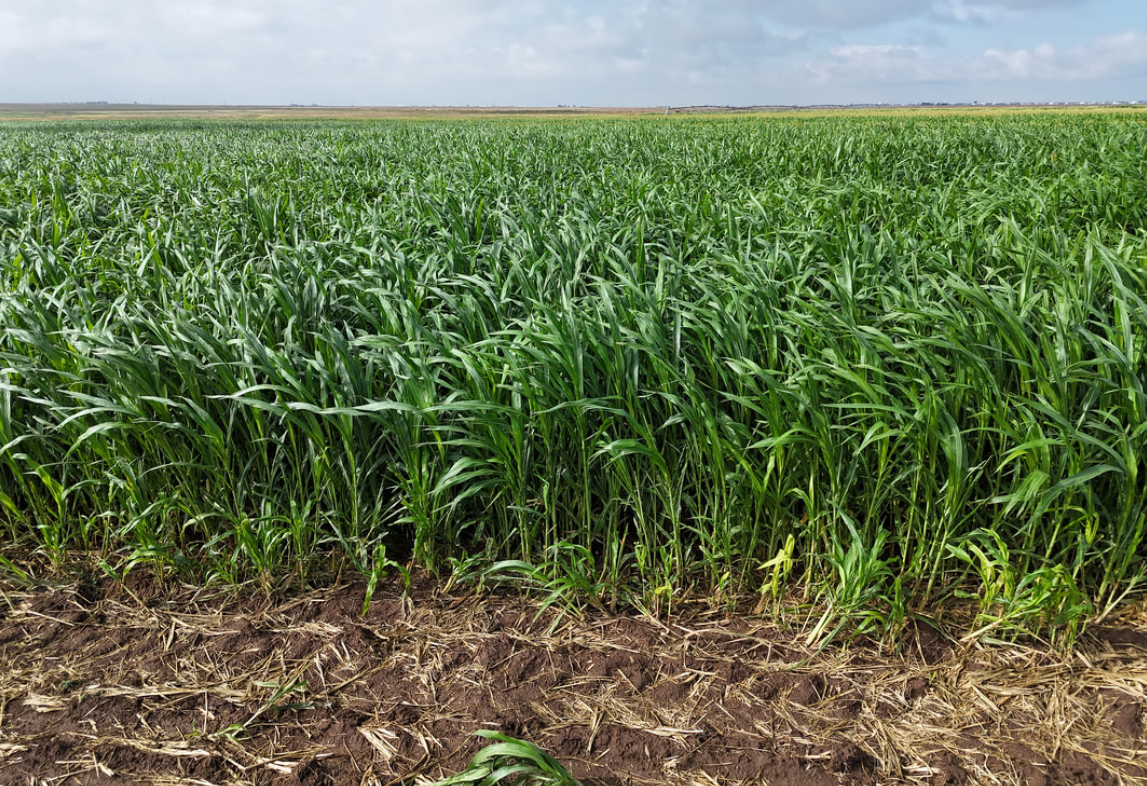
Photoperiod-sensitive hybrids respond to day length, while delayed maturity hybrids are driven by heat unit (GDU) accumulation. Both traits are designed to extend the vegetative growth period, helping preserve forage quality and providing greater flexibility for one-cut systems.
SS 105 is delayed maturity
PF - Prussic Acid Free sorghum sudangrass
Prussic Acid Free hybrids are bred to be low in dhurrin, a compound that can produce toxic prussic acid (cyanide) under stress conditions. This reduces the risk of toxicity and provides greater flexibility for grazing after frost or drought, though standard management precautions should still be followed.
SS 626 PF and SS 636 PF BMR are prussic acid-free
BMR Sudangrass
NEW - > 2025 - CISCO SummerFlex Sudangrass


CISCO SummerFlex BMR Sudangrass
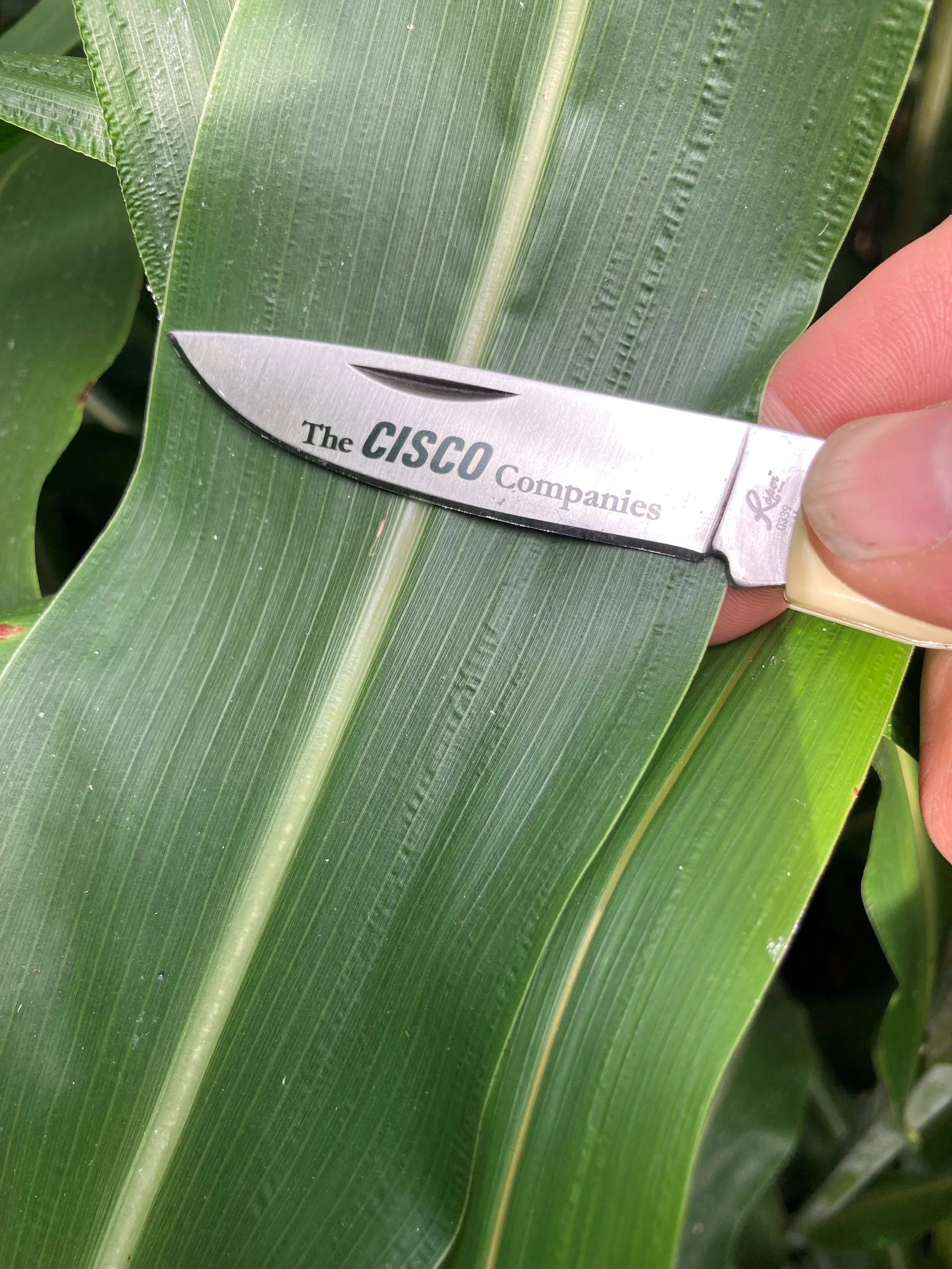
WHat is BMR? (Brown Midrib)
The leaf midrib has a brown coloration, which indicates the presence of BMR genetics. These genetics reduce lignin content in the plant, improving fiber digestibility and increasing intake potential, making it a more efficient forage source for livestock.
Quick Summary
Warm-season grasses are more water- and nutrient-efficient than cool-season grasses and alfalfa.
Warm-season grasses tend to have more lignin, which lowers quality.
Harvest warm-season grasses before they set seed.
BMR reduces lignin and improves quality.
General Agronomy
Warm-season annual forages—including sorghum-sudangrass hybrids, sudangrass, and millets—perform best under warm soil and air temperatures and can be slowed or stressed by cool, wet conditions.
Because post-emergence weed control options are limited, rapid emergence and early canopy closure are critical for suppressing weeds and protecting yield.
While early planting is possible, optimal establishment typically occurs once soil temperatures are consistently above 60°F, and closer to 65–70°F for millets.
General Fertility
N drives yield (1–1.25 lb/day), S supports N efficiency (10–20 lb/ac), K supports yield and standability (35–40 lb/ton), and micronutrients balance (especially Zn and Mn) help optimize forage quality.
Teff Grass
Teff grass is a warm season annual that makes excellent dry hay.
In 45-60 days after emergence, it can yield two plus tons per acre of dry matter. It can make very soft, fine stemmed hay. Many farmers utilize it for horse hay.
It likes to be planted into 68F or warmer soil. Teff needs a very firm seedbed to ensure good germination. Many producers struggle with teff because they plant it too deep or the soil is too loose.
At CISCO we joke about selling a basketball with teff seed. If you can’t dribble the basketball, then the seedbed is not firm enough. This is a great analogy.
Teff grass responds very well to nitrogen fertilization. A split of 50-70 lb/A at seeding, and 30-40 lb/A after each harvest will provide excellent yields.


For planting guidelines, see our Seeding Information Guide.