The value of a cover crop is best seen below the soil surface. Dan Perkins, Jasper County SWCD (IN), shows the power of cover crop roots in this short, but informative video that was shot on April 8, 2013.
Read MoreGiant Marshmallows Beat Snowballs Any Day
Balage, bale silage, or giant marshmallows have become an alternative harvest practice on many Indiana forage farms. It has become a great tool in the hay making arsenal to help prevent hay from becoming rain damaged. Dr. Johnson, Purdue University Forage Extension Specialist, and Jason Tower, Southern Indiana-Purdue Agricultural Center Superintendent, have given several presentations on balage and the benefits of it. In this article I would like to expand on their ideas and discuss what we have learned on our farm.
Read More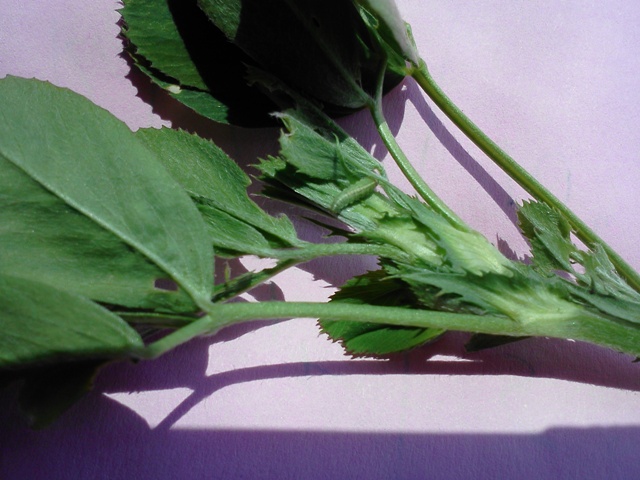
Look closely at the middle of the picture to see the alfalfa weevil larvae.
Time to Scout for Alfalfa Weevil
If you've been out scouting your alfalfa fields, you may have noticed some alfalfa weevil damage.
Read More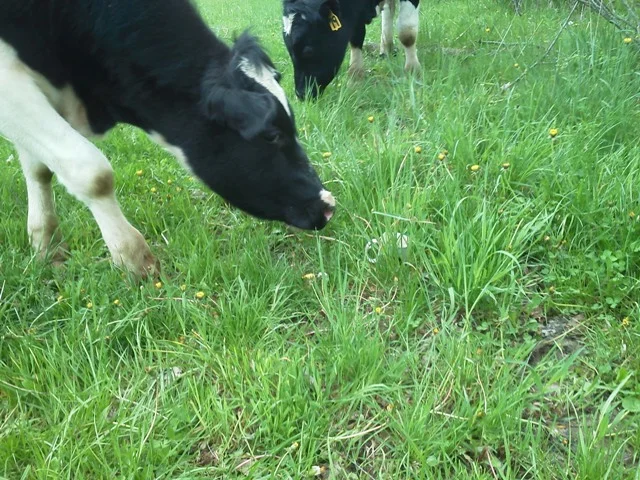
Producers need to be cautious about overgrazing forages. Try to keep the grazed forage height at 4 to 6”. Notice the coffee cup in the picture showing that the orchardgrass is over 4” tall.
Watch Out for Bloat on Lush Spring Green Pastures
Producers need to be aware of the bloat potential of lush spring growth in pastures. Any legumes (except birdsfoot trefoil), but especially ladino/white clover can cause frothy bloat in cattle.
Read More
No-till corn planted into crimson clover cover crop.
Research Shows Cover Crops are Profitable
The benefits of cover crops are well-documented: soil improvement, nitrogen scavenging, erosion control - and the list goes on. Just as exciting as the agronomic benefits are the financial benefits to the farmer. Recent studies have shown increased profit per acre following cover crops.
Read More